
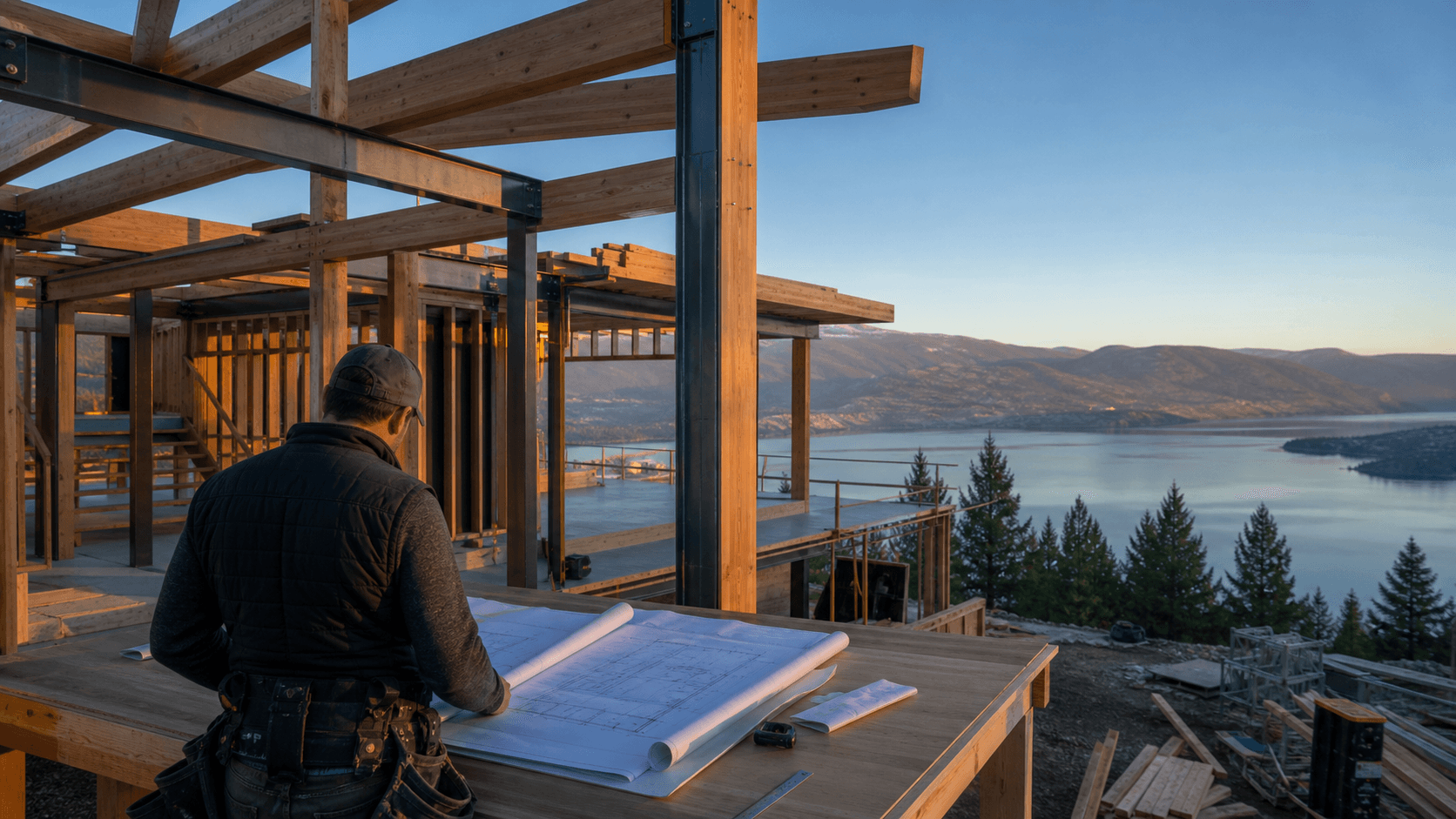
Start with process, not style
Portfolio compatibility matters, but a beautiful gallery does not explain how a builder plans. Ask what happens between the first conversation and the first day on site. Strong pre-construction should address scope, constructability, selections, schedule dependencies, and a realistic cost model.
In the Okanagan, site access, slope, wildfire considerations, seasonal weather, servicing, and municipal approvals can materially affect the plan. A builder should identify these questions early rather than treating them as future details.
Understand how the budget is built
Ask whether the budget is based on drawings, specifications, allowances, historical square-foot assumptions, or trade input. The more decisions that remain allowances, the more uncertainty remains in the final cost.
A useful proposal makes exclusions visible and describes how changes are priced and approved. The goal is not a magically fixed number. It is a transparent relationship between scope, quality, and cost.
Verify the fundamentals
Request current proof of insurance, relevant licensing, warranty-program information, and references from projects similar in scale. Contact references and ask about communication, deficiencies, cleanliness, schedule changes, and how the builder behaved when a difficult issue appeared.
Look for calm communication
Custom homes involve changing information. The important question is whether decisions are documented, owners know what is needed next, and problems surface early. Consistent reporting is more valuable than constant informal messaging.
Planning a project in the Okanagan?
Bring us the context and we’ll help identify the most useful next step.
Start a conversation