
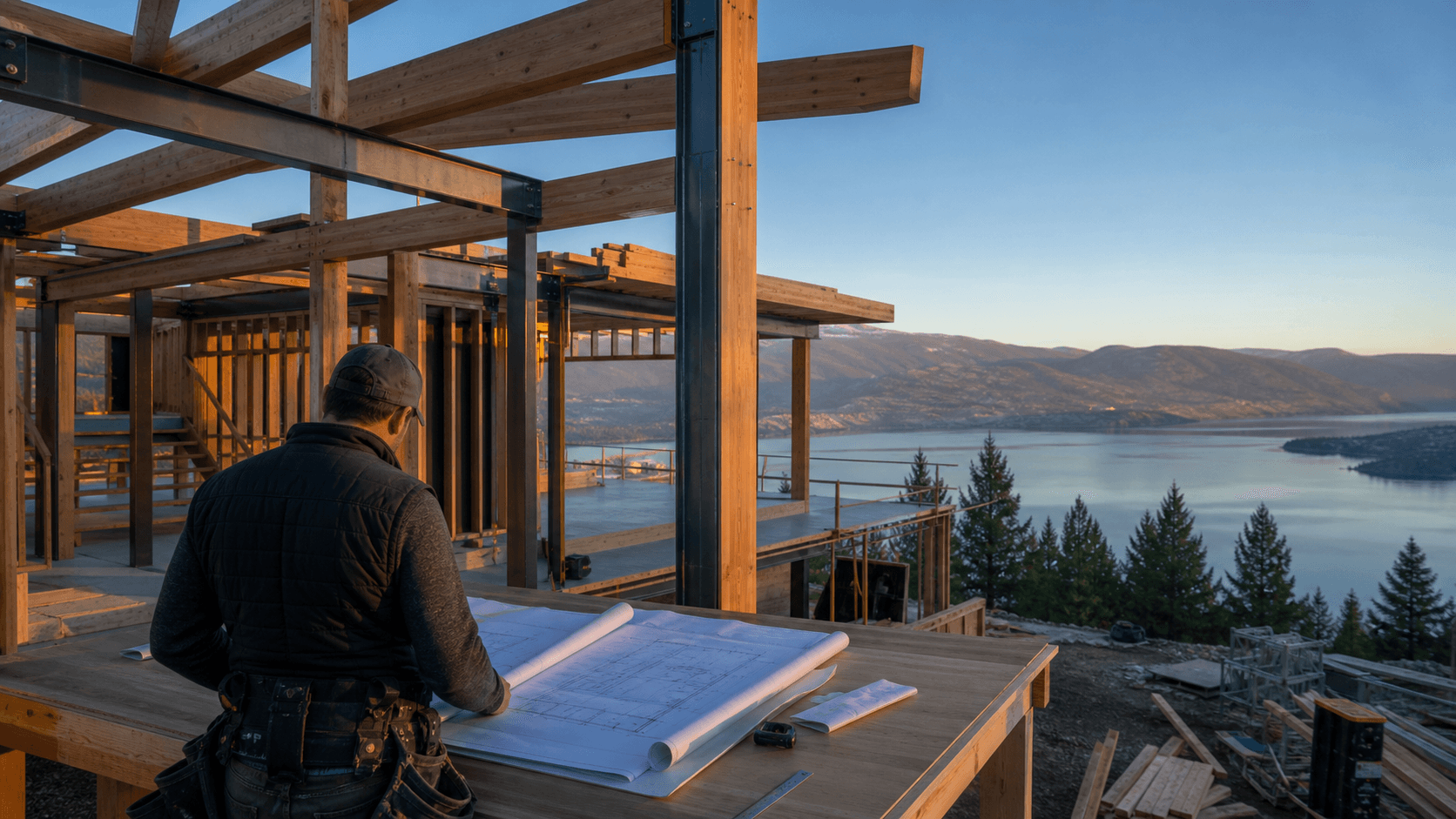
The schedule starts before excavation
Site due diligence, surveys, architectural design, engineering, energy requirements, selections, budgeting, and permits happen before visible construction. Rushing these stages can move uncertainty onto the site, where changes become more disruptive.
Sequence matters more than speed
A custom build is a chain of dependent work. Structure must be ready for enclosure, rough-ins must be coordinated before closing walls, and finish materials require suitable site conditions. A credible schedule respects these relationships rather than compressing every activity on paper.
Decisions and procurement drive continuity
Windows, mechanical equipment, specialty fixtures, cabinetry, and selected finishes may require long lead times. Timely approvals and an organized selections schedule help prevent avoidable gaps.
Ask how the schedule is managed
Discuss reporting frequency, milestone reviews, responsibility for selections, change documentation, and how weather or trade delays are communicated. A useful schedule is actively maintained, not simply issued at the beginning.
Planning a project in the Okanagan?
Bring us the context and we’ll help identify the most useful next step.
Start a conversation